About Amigos
Beyond the Episodes
Meet the People and Discover the Stories Behind Amigos
Who was the actor inside Perro Pepe’s colorful costume? What became of the children who appeared in the series? And how did a university in Tennessee come to produce a nationally broadcast Spanish-language children’s program?
Behind the familiar faces and cheerful songs of Amigos lies a fascinating story of creativity, education, and a shared enthusiasm for introducing children to Spanish language and Hispanic culture.
Join us as we explore the people, places, and stories that brought Amigos to life.
Produced by the University of Tennessee’s Center for Telecommunications and Video, Amigos was an ambitious educational television project designed to introduce children in kindergarten through second grade to Spanish language and culture.
With support from the Corporation for Public Broadcasting and matching university funds, the production team created 30 episodes featuring a lively neighborhood, a welcoming café, and a memorable cast of characters.
The series began airing on PBS stations in August 1990.
Dr. Doris Stephens served as project director, while Emmy-winning television veteran Ozzie Alfonso, whose credits included Sesame Street, contributed writing and direction to eight segments.
Goals of the Amigos Series
The primary goal of Amigos was to expose children to basic Spanish vocabulary. The other three goals were to: introduce children to the Hispanic culture, create an interest in the geography of countries where Spanish is the primary language, and reinforce skills and concepts taught in the regular elementary school curricula.
Who could forget Perro Pepe?
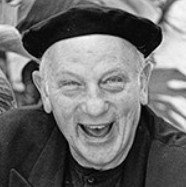
The lovable, six-foot-tall Spanish-speaking dog was portrayed by Harry Frank Porter, an actor with an unusual background in bilingual children’s television.
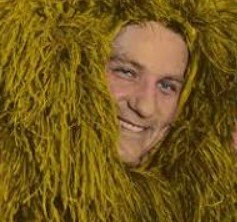
But Amigos was not his first acting role or his first role as bilingual animal. Growing up in South Texas, Harry developed an interest in the Spanish language and especially in the culture of Mexico. In 1970, Harry was chosen for the role of Agapito, the bilingual lion in the acclaimed CARRASCOLENDAS, an innovative bilingual children’s show.
From a bilingual lion to a Spanish-speaking dog, Porter’s career provides a remarkable connection between two generations of educational television.
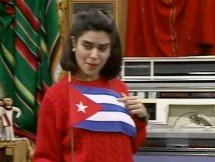
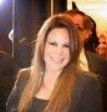
The friendly neighborhood café owner, Señorita Fernández, was portrayed by Nely Galán.
Her character provided a welcoming gathering place where the children—and Perro Pepe—could practice Spanish and explore Hispanic culture.
Galán was born in Cuba and grew up living with her parents in Teaneck, New Jersey. She went on to become the first Latina president of a U.S. television network, Telemundo, and a successful television producer and entrepreneur.
Directors, writers, & other cast members
| Person | Contribution and Career |
|---|---|
| Mark Gagliardi | Mark Gagliardi played “Mark” in the series. He is an American actor, improviser, writer, voice performer, and podcaster. In a June 2023 interview on the Classic Conversations podcast, he actually acknowledged his appearance on Amigos. When the interviewer mentions the series, Mark responds that he was nine years old when he worked on it! |
| Alina Troyano | Alina Troyana played señorita Marisol Fernandez’s sister, Miriam. She is a Cuban American performance artist, playwright, and actor. |
| Ken Burton | Executive Producer. Ken Burton is a British choral and orchestral conductor, composer, performer, producer, presenter, arranger and judge, widely known for his work and appearances on UK television programmes |
| Doris Stephens | Producer. She is an actor, director, writer and producer. |
| A. P. Gonzalez | Director. A. P. Gonzalez (Alfred Peter Gonzalez) is an American writer, director, producer, and film educator whose work has included independent features, documentaries, television, and short films. |
| Ozzie Alfonso | Writer and Director (an Emmy award-winner known for Sesame Street, who traveled from Manhattan to write and direct eight segments of the series). |
More Faces of Amigos
Many other memorable characters helped bring Amigos to life. Although we have not yet identified the actors who portrayed them, we would like to recognize their contributions.Esteban and Lu (hermanos), Fernanda y Aléjandra (hermanas),
Ángel, Roberto, Miguel, Gabriela, Terry Higgs (television producer).
We would love to give credit to those who acted in the series, so If you appeared in Amigos, worked on its production, or know someone who acted in the series we’d love to hear from you!🎨 The “Second Life” of the Studio Set
When taping wrapped up at the University of Tennessee’s Center for Telecommunications and Video (CTV) in early 1991, the university didn’t want the colorful, high-quality production sets to go to waste. [1]
- The Donation: The entire studio stage set—which featured a vibrant neighborhood plaza area and the indoor/outdoor café setting where Señorita Fernández taught the children—was entirely dismantled and donated locally to Knoxville’s West High School. [1]
- The Human Interest Angle: It served a second life as an immersive, real-world backdrop for high school students practicing their conversational Spanish in a simulated neighborhood market, long after the TV cameras stopped rolling. [1]
🎬 A “Sesame Street” Connection
Despite being a regional university production out of Knoxville, Tennessee—which project director Dr. Doris Stephens openly admitted “was not exactly a hotbed of Hispanic culture” at the time—the show managed to pull major talent straight from Manhattan. [1]
- The Director’s Journey: The crew brought in Ozzie Alfonso, a two-time Emmy Award-winning veteran of the Children’s Television Workshop. Alfonso was famous for directing Sesame Street (even earning a primetime Emmy nod for the historic Sesame Street in Puerto Rico special) and serving as the senior producer/writer for PBS’s 3-2-1 Contact. [1, 2]
- Alfonso wrote and directed eight full segments of Amigos, injecting the same high-energy, fast-paced educational magic that made Sesame Street a global phenomenon. [1, 2]
🦊 The Story Behind “Perro Pepe”
The physical centerpiece of the show was Perro Pepe, a giant, six-foot-tall Spanish-speaking dog played by actor Harry Frank Porter. [1, 2]
- The Costume: Pepe was unmistakable on color television, sporting a bright, furry orange costume, a green top hat, a purple tie, and a matching cummerbund.
- The Episode Narrative: One of the most complex, culturally dense episodes filmed during their hot 1989 summer shoot was “Pepe’s Birthday”. In the episode, Pepe dresses up “to the nines” to surprise his friends, only to be ambushed by an impromptu surprise party thrown by the neighborhood kids, introducing young viewers to traditional Hispanic birthday foods, folk music, and party games.
- Fun Character Trivia: Harry Frank Porter was uniquely suited for the role; he spent much of the 1970s playing another iconic Spanish-speaking animal costume character—Agapito the Lion—on the groundbreaking bilingual PBS series Carrascolendas. [1, 2, 3]
🏫 The “Teacher-Proof” Curriculum Design
The broader educational mission of Amigos was actually designed to solve a critical shortage of bilingual elementary educators in the late 1980s and early 1990s. [1]
- The Goal: Dr. Doris Stephens designed the 30-episode curriculum explicitly for children in kindergarten through second grade.
- The Strategy: The primary objective was to deploy the series directly into public school classrooms during regular morning hours. The curriculum was purposefully structured so that elementary school teachers did not need to speak a word of Spanish themselves to facilitate the lessons. It relied on total television immersion through Pepe and Señorita Fernández to handle the pronunciation, vocabulary, and cultural notes organically.
- The CPB Grant: Backed by the $408,000 grant from the Corporation for Public Broadcasting (plus matching university funds), the show was distributed entirely free of charge to every PBS affiliate across the country for a mandatory three-year broadcast cycle starting in Fall 1990. For school districts outside of PBS broadcast ranges, UT offered physical cassette videotapes through a national educational distributor. [1, 2, 3]
Interesting Tidbits
- Amigos grew out of an earlier French-language project. The University of Tennessee had developed a French program for kindergarten students in 1986. Its success inspired the Spanish series.
- The entire series nearly depended on just two episodes. The Corporation for Public Broadcasting agreed to help finance two pilot episodes. Funding for the other 28 depended on whether those pilots succeeded.
- The producers tested Amigos with 505 children. In March 1989, kindergarten through second-grade students across four regions of the country participated in evaluations. Researchers measured attention, comprehension, and enjoyment.
- The attention rates were extraordinary. Researchers recorded average visual-attention rates of 98% for Episode 1 and 97% for Episode 2. Those are measures of attention during the observed viewing sessions, not audience ratings.
- Children loved Perro Pepe! Some children said they wanted to play with him. When researchers asked what other children might like about him, approximately one-third said he could teach them Spanish. About four-fifths recognized both Pepe and Señorita Fernández as Spanish teachers.
- The songs were an essential part of the educational design. Original songs were composed to reinforce vocabulary. The producers deliberately combined music, repetition, dialogue, and opportunities for children to respond.
- Amigos originally came with a substantial teaching package. A teacher’s guide included lesson plans, cultural information, pronunciation guides, and song lyrics. Two audiocassettes accompanied it: one for pronunciation exercises and another for the songs.
- Señorita Fernández’s shop wasn’t simply a convenient setting.
The article explains that the boxes arriving at her shop were deliberately incorporated into the scripts. Unpacking them provided opportunities to introduce Hispanic culture and the geography of Spanish-speaking countries.
That’s clever instructional design!
Questions About the Series
Our research has also raised some intriguing questions:
Were Marisol and Miriam sisters in real life? The answer is no, they are not sisters.
Who were the young actors who brought the neighborhood children to life? One, Mark (Mark Gagliardi), has continued to work as an actor and writer. We will continue searching for identities of other cast members.
Was there a reason for Marisol’s long absence from the series, when she was traveling to Spain to replenish inventory for the Fonda? We have not been able to find the answer to this question.
We’re continuing to investigate these questions and hope to share more discoveries.
Explore More
Share Your Memories
Did you watch Amigos when it originally aired? Were you involved in the production, or do you know someone who appeared in the series?
We’d love to hear from you. Contact us at swfloridaspanish@gmail.com
Language Classics is working to preserve not only classic educational television programs but also the stories of the people who created them.